
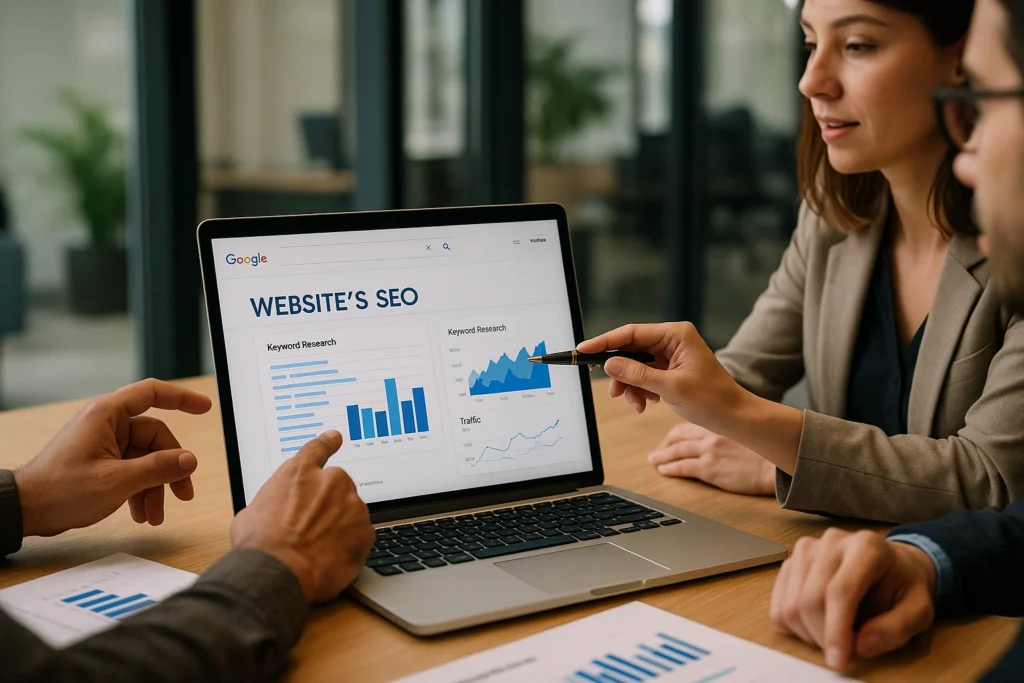
Search Engine Optimization (SEO) in 2026 is smarter, more user-focused, and more competitive than ever. With AI-powered search, voice queries, and constantly evolving algorithms, ranking well now requires more than just keywords—it requires strategy, structure, and genuine value.
If you want to increase visibility, attract the right audience, and stay ahead of competitors, follow these 7 essential steps to improve your website’s SEO in 2026.
1.Focus on Search Intent, Not Just Keywords
Best social media marketer in palakkad Modern search engines prioritize user intent—the why behind a search. Instead of stuffing pages with exact-match keywords, focus on answering the real question users are asking.
Action tips:
- Identify whether the intent is informational, navigational, commercial, or transactional
- Create content that fully solves the problem
- Use natural language and semantic variations of keywords
In 2026, helpful, intent-driven content consistently outranks keyword-heavy pages.
2.Optimize for AI & Voice Search
AI-driven search assistants and voice search are now mainstream. Queries are longer, more conversational, and often phrased as questions.
How to optimize:
- Use question-based headings (Who, What, How, Why)
- Add concise answers at the top of content
- Implement FAQ schema
- Write in a conversational tone
- Websites that adapt to voice and AI search gain visibility in featured snippets and zero-click results.
3.Improve Core Web Vitals & User Experience
User experience is a direct ranking factor. Google’s Core Web Vitals still matter—and expectations are higher.
Key areas to improve:
- Page loading speed (under 2 seconds)
- Mobile responsiveness
- Visual stability (avoid layout shifts)
- Clean, intuitive navigation
A fast, smooth, mobile-first experience keeps users engaged and reduces bounce rates.
4.Create High-Quality, Topical Authority Content
Search engines reward websites that demonstrate expertise and authority in a specific niche.
Best practices:
- Build topic clusters around core themes
- Publish in-depth, well-researched articles
- Update old content regularly
- Cite credible sources
Consistency and depth help establish your website as a trusted authority in your industry.
5.Optimize for E-E-A-T (Experience, Expertise, Authority, Trust)
In 2026, E-E-A-T plays a major role in rankings—especially for competitive and YMYL (Your Money, Your Life) niches.
Ways to strengthen E-E-A-T:
- Add author bios and credentials
- Showcase real-world experience
- Use HTTPS and secure your site
- Display reviews, testimonials, and trust badges
Trust signals help both users and search engines feel confident in your content.
6.Build High-Quality Backlinks (Not More Links)
Link quality outweighs link quantity. A few authoritative backlinks can outperform dozens of low-quality ones.
Smart link-building strategies:
- Guest posting on reputable sites
- Digital PR and brand mentions
- Creating shareable data, tools, or guides
- Earning links through original research
Natural, relevant backlinks remain one of the strongest ranking signals.
7.Use Data, Analytics & SEO Automation Tools
SEO in 2026 is data-driven. Automation and AI tools help you scale smarter—not harder.
What to track:
- Organic traffic and conversions
- Keyword performance
- User behavior (time on page, bounce rate)
- Technical SEO issues
Use insights to refine strategies, identify gaps, and stay ahead of algorithm changes.
Final Thoughts
SEO in 2026 is about people first, technology second. By focusing on user intent, experience, authority, and smart optimization, you can future-proof your website and achieve long-term search visibility.
Start with these seven steps, stay consistent, and keep adapting—because SEO isn’t a one-time task, it’s an ongoing strategy.